Understanding Photosynthesis, Cellular Respiration, and DNA in Cellular Function
This overview captures essential biological processes, including photosynthesis in chloroplasts and cellular respiration in mitochondria, highlighting the conversion of light energy and organic molecules into ATP, the energy currency of cells. It also discusses the structure and function of DNA, genes, chromosomes, and histones, which carry genetic information. The complexities of the Calvin Cycle, glycolysis, and the Krebs Cycle are outlined, emphasizing their roles in energy production and cellular reproduction—all vital for life.


Understanding Photosynthesis, Cellular Respiration, and DNA in Cellular Function
E N D
Presentation Transcript
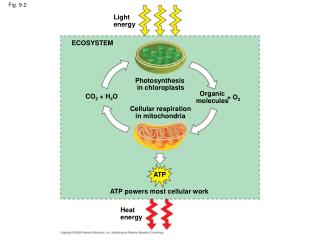
Fig. 9-2 Light energy ECOSYSTEM Photosynthesis in chloroplasts Organic molecules CO2 + H2O + O2 Cellular respiration in mitochondria ATP ATP powers most cellular work Heat energy
Fig. 9-6-3 Electrons carried via NADH and FADH2 Electrons carried via NADH Oxidative phosphorylation: electron transport and chemiosmosis Krebs Cycle Glycolysis Pyruvate Glucose Mitochondrion Cytosol ATP ATP ATP Substrate-level phosphorylation Substrate-level phosphorylation Oxidative phosphorylation
Fig. 10-5-4 CO2 H2O Light NADP+ ADP + P i Calvin Cycle Light Reactions ATP NADPH Chloroplast [CH2O] (sugar) O2
Vocab Terms Introduction to Cell Reproduction
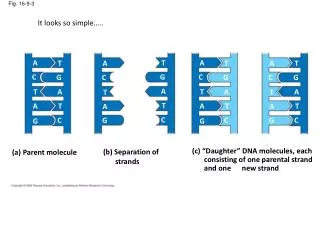
DNA • A double-stranded polymer of nucleic acid that functions as the carrier of genetic information in cells
Gene • Unit of heredity that consists of a segment of DNA that codes for a functional unit of RNA or protein
Chromosome • Structure in cell made up of condensed DNA and protein, carrying genetic information in the form of genes
Chromatin • The uncondensed material (DNA and proteins) from which chromosomes are made.
Histone • Type of protein molecule found in the chromosomes of eukaryotic cells but generally not prokaryotic cells.
Chromatid • One of two duplicated strands of a chromosome that become visible during cell division
Centromere • The region of the chromosome that holds the two sister chromatids together during cell division.