Download
1 / 12
120 likes | 232 Vues
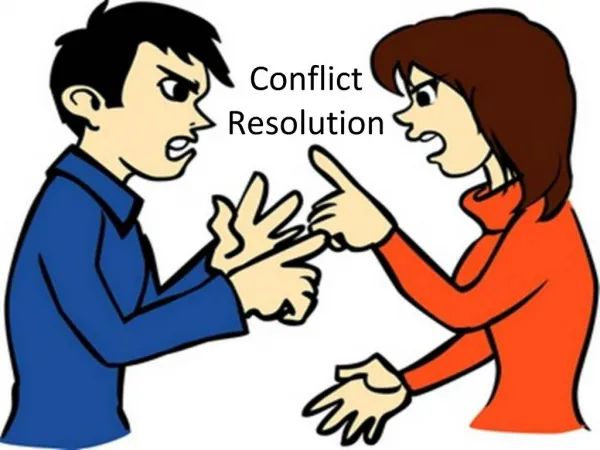
Conflicts are inevitable in any relationship, stemming from differing perspectives, needs, and personalities. To resolve conflicts effectively, it's essential to communicate openly: voice your concerns, evaluate the issue, and listen actively. Employ techniques such as mediation and compromise where both sides surrender some of their demands. Avoid bringing up issues when parties are preoccupied, and focus on the problem rather than personal attacks. Utilize "I" messages to express feelings without placing blame. Remember, timely and respectful resolution fosters healthier relationships.

E N D
Conflicts are disagreements or problems in a relationship • Why do people have conflicts? • People think differently and have different personalities, wants and needs. • Use of a mediator • Compromise • Both sides giving up some of what they want in order to settle
Method of Resolving Conflicts • Voice your concerns • Decide what the problem is • Listen to the other side • Suggest all possible solutions • Good conversation skills • Find the right time to resolve conflicts • Avoid bringing up a conflict when people are busy • Deal with issues, not personalities • Don’t allow conflicts to go on without being resolved
Manners, Active Listening and “I messages” • I – messages • “I feel…” • Do not say “You” • Do not place blame • State your feelings
Lesson on Life from Noah • Don’t miss the boat. • Remember that we are all in the same boat. • Plan ahead. It wasn’t raining when Noah built the ark. • Stay fit. When you’re 600 years old, someone may ask you to do something really big. • Don’t listen to critics. Just get on with the job that needs to be done.
Build you future on high ground. • For safety’s sake, travel in pairs. • Speed isn’t always an advantage. The snail were on board with the cheetahs. • When you’re stressed, float awhile. • Remember, the Ark was built by amateurs; the Titanic was built by professionals.
Decision Making • Managing your resources is an important part of decision making. • Many decisions concerning your resources affect your daily life. • You decide whether to go to the mall with a friend or partake in family night.
Decision Making Process State the problem Options Make a decision E valuate your decision
Time Management • Plan your time usage by making a schedule • A written plan for reaching your goals within a certain period of time. • Avoid wasting time (procrastination) • Putting off a difficult or unpleasant task until later.
Energy Management • Food and energy • Physically active people need more energy than sedentary people • Sleep and energy • Sleep is required to have the energy you need • Different for everyone • Exercise and energy • People that exercise regularly have more energy • Regular exercise enables your body to handle larger work loads
Your mission… • Create a collage that shows different ways to gain energy • Turn in by the end of class.