The Tet Offensive and Its Impact on America: A Turning Point in the Vietnam War
90 likes | 215 Vues
January 30, 1968, marked the start of the Tet Offensive in Vietnam, a surprise attack by the Vietcong on over 100 cities. Though it was a military setback for the Vietcong, it deeply unsettled the American public, leading to increased anti-war sentiment and a fracture within the Democratic Party. President Johnson's decision not to seek reelection and the subsequent tumultuous presidential race reflected the nation's division. The war's legacy, including the My Lai Massacre and the impact of returning veterans, continues to resonate today, shaping American views on military intervention.


The Tet Offensive and Its Impact on America: A Turning Point in the Vietnam War
E N D
Presentation Transcript
1968 & the Vietnam Legacy Chapter 30 Sections 4 & 5
I The Tet Offensive • January 30th in Vietnam marks beginning of Lunar new year festivities known as Tet = to our New Years • Agreed on truce for festivities ppl pouring into cities • Tet Offensive= Vietcong launch surprise attack on over 100 cities in S Vietnam • Was military failure but frightened Amer. Pop who believed war was almost over openly criticized war • LBJ- “If iv’e lost Walter (Cronkite), then its over. I’ve lost Mr. Average Citizen”
II Democratic Party Fractures • Group within Dem sought to unseat LBJ as pres. In next election • Robert Kennedy refuses but McCarthy accepts Pres primary gains speed after Tet • LBJ wins by only 6% in NH Kennedy announcing his candidacy • LBJ speech – announces US in peace negotiations & will not seek re-election • RFK wins crucial Cali primary race shot by Palestinian immigrant who was angered by his support of Israel • All while campus protests kept raging http://www.history.com/videos/johnson-says-he-wont-run#johnson-says-he-wont-run
III Turbulent Race for President • LBJ resigned & RFK dead left McCarthy v Humphrey for Dem. Pres nominee • SDS protester arrive at Dem. National convention to force anti-war platform • Yippies ( Youth International Party) came to provoke violence & discredit Dem. Party • Dem convention massive riot disorder and violence of Dem convention sticks in ppls minds • Nixon runs on restoring LAW & ORDER • Wallace (Ind.) wins 5 southern states • Nixon Wins (43% pop vote but over 100 electoral)
IV President Nixon & Vietnamization • Nixon comes to office w/ peace talks going nowhere & institutes Vietnamization strategy • Gradual withdrawal of US troops so that the S Vietnamese take more combat role • “Peace with Honor” = maintaining US dignity while withdrawing troops & preserve US power at negotiation table • Nixon order secret bombing campaign of N and neighboring Laos & Cambodia • Wanted enemy to believe he was capable of anything
V Trouble Continues at Home • Nixon appeals to “silent majority’ to pass his policies further divided country • Moderate mainstream Americans • My Lai Massacre shocked the nation • 1970- Nixon announces US troops invade Cambodia college campuses erupt in protest • Kent State protest Nat’l Guard fires into crowd and kills students
Nixon looses support of Congress • Bombing & invading of Cambodia Congress repeals Tonkin Gulf Resolution • Pentagon Papers= doc. Written for Sec. of Def. that revealed the gov’t was making plans to enter Vietnam even as LBJ was promising not to send troops • Also no plan to end war If N Vietnamese continued their campaign • Pentagon paper ppl viewing the gov’t not being honest • Vietnam War ends after short lived peace broken and another bombing raid
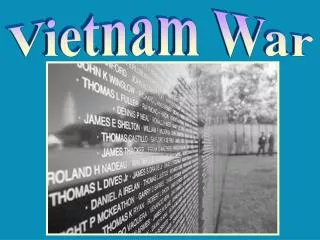
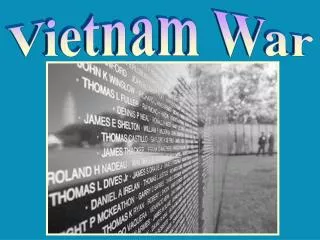
VI Veterans return Home • Vietnam vets did not get welcomed back with parade but with hostility • Ppl still bitter and divided on the war • Delayed stress syndrome – recurring nightmares, headaches, memory lapses, drug & alcohol abuse, etc. • Vietnam Veterans Memorial in DC
VII Khmer Rouge & Vietnam’s effect of America • US invasion of Cambodia Civil war Khmer Rouge • Communist group who committed genocide in Cambodia in order t transform country into a communist peasant led society • War Powers act (1973) pres. Must inform Congress within 48 hrs. if US forces are sent into hostile area w/o declaration of war • Can stay up to 90 days unless congress approves actions or declares war • Vietnam Syndrome- Americans weigh poss risks before intervening in other countries • Cynicism of political leaders