NCEP PTYPE Algorithms
350 likes | 480 Vues
Winter weather forecasting poses significant challenges due to varying precipitation types. Ptype algorithms, such as NCEP Baldwin-Schichtel and Ramer, have been developed to systematically analyze model outputs for accurate determination of precipitation state. These algorithms utilize thermodynamic profiles and temperature data to assess hydrometer states, ensuring precise forecasts of rain, snow, sleet, and freezing rain. Each algorithm has its strengths and weaknesses, notably in addressing biases and interpreting temperature layers. Combining outputs from multiple algorithms enhances forecast reliability, essential for effective winter weather predictions.


NCEP PTYPE Algorithms
E N D
Presentation Transcript
NCEP PTYPE Algorithms Fred H. Glass NOAA/NWS St. Louis LSX Winter Weather Workshop – November 19, 2008
Why Have Ptype Algorithms? • Forecasting winter weather is a significant challenge • A variety of precipitation algorithms have been developed in an effort to address this challenge!
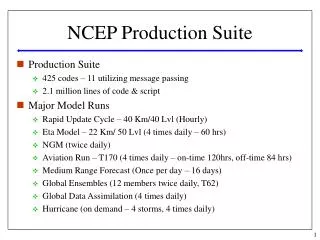
Algorithms 101 • Ptype from the algorithms is derived by post-processing of the model output • Ptypes are generated when even just a trace of precipitation is generated by the model • No single algorithm handles all ptypes in a sufficient manner • Always examine soundings; even when they are accurate the output from the various algorithms may generate conflicting ptypes due to their methodologies and assumptions • An ensemble approach should be considered by comparing the output of the different algorithms
Algorithms/Techniques • NCEP Baldwin-Schichtel • NCEP Revised • Ramer • Bourgouin • Czys
NCEP Baldwin-Schichtel(aka NCEP, Baldwin, or BTC) • Developed based on MS research at Univ. of Oklahoma by Schichtel, utilizing ETA model vertical thermodynamic profiles and hourly precipitation reports • Utilizes a decision tree approach • Identifies warm and cold layers by calculating the area between the 0°C or -4°C isotherm and the wet-bulb temperature • Compares magnitude of warm/cold layers (area) with the surface temperature to identify ptype
NCEP Baldwin-Schichtel(the steps) • First identifies the highest saturated layer (considered to be the precipitation generation layer) • Next determines the initial state of these hydrometers • T < -4°C → assumed to be ice crystals • T ≥ -4°C → assumed to be supercooled water drops • If supercooled water droplets, then checks the surface temperature (lowest model layer) • Tsfc ≤ 0°C → freezing rain • Tsfc > 0°C → rain
NCEP Baldwin-Schichtel(the steps) • If ice crystals, then the magnitude of the area between the -4°C isotherm and the wet-bulb temperature profile in the sounding is computed • if area ≤ 3000 deg m → snow • if area > 3000 deg m → ice crystals melted → checks to see if hydrometers re-freeze into ice pellets or if they fall to the surface as rain or freezing rain
NCEP Baldwin-Schichtel(Strengths and Weaknesses) Strengths • Easily applied and widely used • Initial check for hydrometer state • Utilizes the wet-bulb temperature • Forecasting freezing rain and sleet Weaknesses • Will forecast freezing or liquid precipitation with deep isothermal layer near the surface with Tw between 0°C and -4°C • Ignores impact of dry layers • Tendency to over-forecast freezing rain and sleet
NCEP Revised • A modified version of the NCEP Baldwin-Schichtel • Attempts to balance the freezing rain and sleet bias of the regular version by having a bias towards snow • Instead of the -4°C area check, it computes the area in the sounding with a wet-bulb temperature greater than 0°C
NCEP Revised(modified step) • If ice crystals, then the magnitude of the area in the sounding with a wet-bulb temperature > 0°C is computed • if area ≤ 500 deg m → snow • if area > 500 deg m → ice crystals melted → checks to see if hydrometers re-freeze into ice pellets or if they fall to the surface as rain or freezing rain
NCEP Revised(Strengths and Weaknesses) Strengths • Easily applied • Initial check for hydrometer state • Utilizes the wet-bulb temperature • Eliminates the near surface isothermal layer problem with the original algorithm • Removes the freezing rain and sleet bias Weaknesses • Not readily available • NCEP website • Part of dominant technique • Ignores impact of dry layers
Ramer • Developed in the early 1990s utilizing over 2000 cases of collocated surface precipitation observations and upper air soundings • Utilizes T, RH, and the Tw at different pressure levels as input • Based on the pressure level data, it identifies layers where precipitation is likely and calculates an ‘ice fraction’ • Follows the idealized precipitation parcel down to the ground from a ‘precipitation generating level’, anticipating the state of the hydrometer
Ramer(the steps) • Two preliminary checks are completed before the method performs a full calculation • if surface Tw > 2°C → rain is diagnosed • if surface Tw ≤ 2°C and the Tw < -6.6°C at all other levels → snow is diagnosed • If these checks fail then a full calculation of the ‘ice fraction’ of the hydrometer is computed
Ramer(the steps) • Determine the ‘precipitation generating level’ • highest level with RH > 90% • level must be located at or below 400 mb • Determine the initial hydrometer state at the generating level • if Tw < -6.6°C → completely frozen (ice fraction=1) • if Tw ≥ -6.6°C → completely liquid (ice fraction=0) • The algorithm then determines the amount of freezing and melting and the resultant ‘ice fraction’ of the hydrometer is computed
Ramer(the steps) • The algorithm then determines the amount of freezing and melting and the resultant ‘ice fraction’ as the hydrometer descends from the ‘generation level’ • Identifying layers warmer/colder that 0°C based on the depth of the layer and average Tw • Assigning an ice fraction at each level • Ptype is determined by the final ice fraction of the hydrometer at the surface • > 85% = sleet, <4% and TWsfc < 0 = freezing rain • Between 4-85% = mixed, 100% = snow
Ramer(Strengths and Weaknesses) Strengths • Developed utilizing observed data • Initial check for hydrometer state • Utilizes the wet-bulb temperature • Verifies well - high POD for snow (90%) and freezing rain (60%) Weaknesses • Hard to visualize • Does not account for impact of dry layers • Low POD for sleet (low FAR also)
Bourgouin • Developed in the early 1990s in Canada utilizing a dataset from two winters of collocated surface precipitation observations and upper air soundings • Based on the premise that the temperature variation of a hydrometer and its phase changes are predominately driven by the temperature of the environment through which it falls; assumes a constant vertical motion and terminal velocity • Calculates the areas above and below freezing, and the magnitude of the freezing and melting energy then determine ptype.
Bourgouin(Strengths and Weaknesses) Strengths • Based on observed data and associated ptype • Can be applied to any region or model data • High POD for freezing rain Weaknesses • Assumes ice crystals are present • Does not account for dry layers or impacts • Uses T rather than Tw • Assumes a constant terminal velocity of hydrometers
Czys • A non-dimensional parameter developed to distinguish ice pellet and freezing rain environments • Not derived from any observed data, but rather on the established condition that most incidents of freezing rain and ice pellets are associated with an elevated warm layer above a layer of sub-freezing air adjacent to the surface, and any cloud ice must completely melt for freezing rain
Czys • Initially tested with excellent results using data from the 1990 Valentine’s Day Ice Storm in the Midwest, and several other events during the winter of 1995-96. • Ptype is determined primarily by computing the ratio of the residence time that an ice sphere remains in a warm layer, to the time required for complete melting • Minor modifications by Cortinas et. al (2000) to also predict snow and rain
Czys(Strengths and Weaknesses) Strengths • Can be applied to any region or model data • Limited skill in forecasting sleet and delineating rain Weaknesses • Not based on observed data • Poor with snow • Overall is the worst performing algorithm • Limited availability
Dominant Ptype Ensemble • Approach utilized by the WRF-NAM output available in both AWIPS and Bufkit and the GFS in AWIPS • WRF-NAM uses 5 schemes – NCEP BS, NCEP Revised, Ramer, Bourgouin, and explicit cloud microspyhysics • GFS uses 4 schemes - NCEP BS, NCEP Revised, Ramer, and Bourgouin • Ties result in the most dangerous ptype (ZR, S, IP, R) • SREF – like WRF-NAM → dominant ptype of 5 schemes for each member (21 members) → ptype with most members wins • Dominant algorithm approach (SREF NCEP BS, Cysz)
Availability • NCEP Baldwin-Schichtel • EMC website/NAM meteogram (www.emc.ncep.noaa.gov/mmb/precip_type) • Part of dominant ptype in SREF (SPC or NCEP Winter System) (www.emc.ncep.noaa.gov/mmb/SREF/FCST/COM_US/winter_js/html/prob_prcptype.html) or (www.spc.noaa.gov/exper/sref/) • Part of dominant ptype ‘ensemble’ for GFS in AWIPS and WRF-NAM in AWIPS/Bufkit • HPC Winter Weather Diagnostics (WWD) website • NCEP Revised • EMC website/NAM meteogram • Part of dominant ptype ‘ensemble’ for GFS in AWIPS and WRF-NAM in AWIPS/Bufkit • Ramer • EMC website/NAM meteogram • Part of dominant ptype ‘ensemble’ for GFS in AWIPS and WRF-NAM in AWIPS/Bufkit • LAPS in AWIPS • GFS Bufr data in Bufkit
Availability • Bourgouin • EMC website/NAM meteogram • Part of dominant ptype ‘ensemble’ for GFS in AWIPS and WRF-NAM in AWIPS/Bufkit • Any model in Bufkit • Cysz • SPC SREF dominant ptype
AWIPS(Dominant of NCEP BS, NCEP Revised, Ramer, & Bourgouin)
Summary of strengths & weaknesses • NCEP Baldwin-Schichtel • Good for ZR and IP; utilizes Tw • Problem with near surface isothermal layers • NCEP Revised • Better for snow – eliminates isothermal layer problem • Does not account for dry layers • Ramer • Strongest from statistical approach; utilizes Tw • Does not account for dry layers; difficult to understand • Bourgouin • Easy to visualize; observed data used in creation • Does not check initial hydrometer state • Cysz • Limited skill with IP and ZR • Overall the worst performing