Download
1 / 13
140 likes | 287 Vues
The Civil Rights Movement, beginning in the 1940s, sought to end racial segregation in daily life, affecting areas like schools, transportation, and public facilities. Key figures such as Rosa Parks, who initiated the Montgomery bus boycott in 1955, and Martin Luther King Jr., known for his leadership and iconic "I Have a Dream" speech, played crucial roles. The movement faced significant challenges, exemplified by George C. Wallace's staunch opposition to integration and the tragic 16th Street Baptist Church Bombing, which claimed the lives of four young girls and marked a pivotal moment in the struggle for civil rights.

E N D
Civil Rights Movement By Joleigh Parker
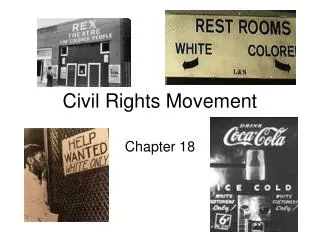
Segregation • Segregation is the separation of humans into racial groups in daily life including eating in a restaurant, using a water fountain, public toilet, attending school, or going to the movies.
Integration • Integration, or desegregation is the process of ending segregation.
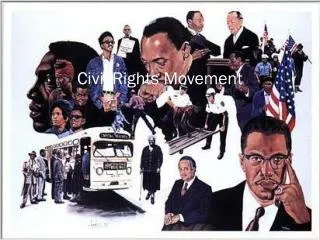
Beginning of the civil rights movement • Began In the 1940s. • Involved many important historical figures and events • Rosa Parks • Martin Luther King Jr. • George C. Wallace • 16th Street Baptist Church Bombing
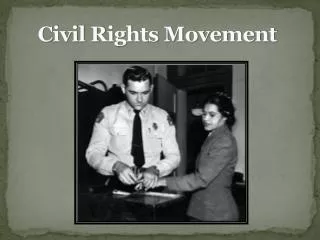
Rosa Parks • Born in Tuskegee, Alabama, in 1913 • "the first lady of civil rights" • In 1955 she refused to give up her seat on the bus and began the Montgomery bus boycott.
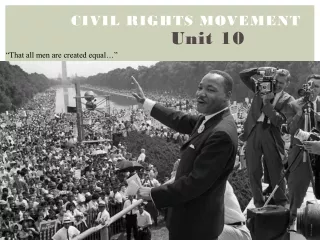
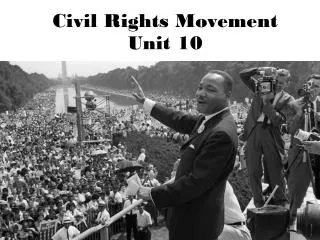
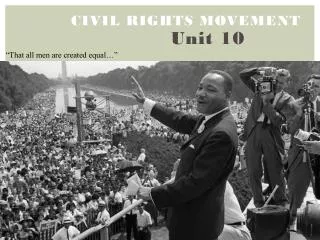
Martin Luther King Jr. • Born in Atlanta, Georgia in 1929 • Baptist minister and leader of the civil rights movement • Organized many marches and speeches • “I have a dream”
George C. Wallace • Born in Clio, Alabama in 1919 • Governor of Alabama • Against intregration
George C Wallace blocking students from entering University of Alabama
16th Street Baptist Church Bombing • September 15, 1963 • Birmingham, Alabama • Meeting place of civil rights leaders • Four young girls were killed • Turning point of civil rights movement of the 1960s