Download
1 / 19
190 likes | 349 Vues
Heart disease is a significant health issue that occurs when blood supply to the heart is blocked, often by cholesterol, leading to serious conditions such as angina, heart attacks, and strokes. High blood pressure can exacerbate these conditions, as it forces the heart to work harder. Preventive measures include maintaining a healthy diet low in fried foods and red meat, regular exercise, and managing stress. Awareness of blood vessels' roles—arteries for oxygenated blood and veins returning deoxygenated blood—is crucial for heart health.

E N D
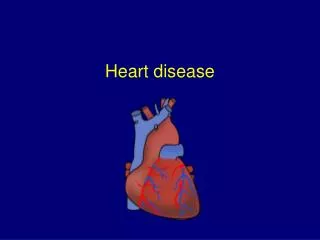
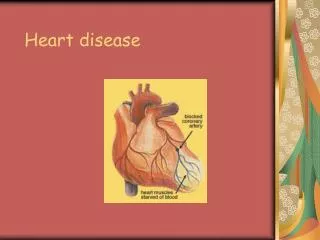
Heart Disease • To get the energy to keep pumping your heart needs food and oxygen (for respiration) • It gets the food & oxygen from its own blood supply carried by the coronary arteries • If these arteries get blocked it leads to heart disease
Cholesterol • Fatty substance that sticks to the inside walls of an artery making them narrower • This slows the blood down • If blood vessels get blocked completely it is called thrombosis and blood flow is stopped
Hypertension • High Blood Pressure • This happens when blood vessels are partly blocked by cholesterol • The heart has to pump much harder to push the blood through = higher pressure on the blood vessels
STROKE • A thrombosis in a blood vessel in the brain is called a stroke • Brain cells die because they have no oxygen • A person who has a stroke may become paralysed or even die
Angina • If a coronary artery gets partially blocked, the heart muscle gets too little food and oxygen • This results in severe chest pains called angina
HEART ATTACK • A thrombosis in the coronary artery can cause a heart attack • This is when the heart stops beating • “CLEAR” – but with the right treatment the heart can be forced to start beating again
Causes of Heart Disease • Smoking • Being overweight • Eating too much cream, butter, eggs, fat or fried foods = high cholesterol in the blood • Not exercising enough • Being stressed (worry, angry, fear)
Avoiding Heart Disease • Cut down on fried food • Boil, steam or grill food instead • Eat less red meat • Eat more poultry (chicken) and fish • Eat less dairy • Eat more vegies and fruit and nuts • Do NOT smoke • Exercise regularly (20 min a day minimum!) • Relax! Don’t get too stressed out – chill out!
Blood Vessels • The blood circulates around the body more than a thousand times a day • Arteries • Arterioles • Capillaries • Venules • Veins
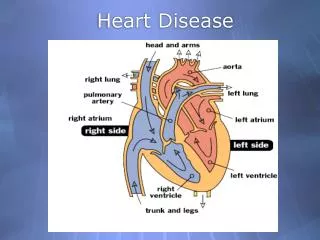
Blood Vessels: Arteries • Carry blood Away from the heart • Carry oxygenated blood – except for the pulmonary artery which is going to the lungs to be re-oxygenated • Have thick, elastic walls to withstand high blood pressure • The blood moves in pulses due to the pumping action of the heart
Arterioles • Smallest arteries • Made mostly of smooth muscle • This means the diameter can vary, so blood can be diverted to where it is most needed.
Blood Vessels: Veins • Carry blood back to the heart – gravity means this is not an easy job! • Carry deoxygenated blood • Have thin walls because the blood travels at low pressure • Muscles around the veins contract to help move the blood back towards the heart • Veins have one-way valves to stop blood flowing backwards
Artery vs. Vein Structure Larger Lumen (space in middle) – less resistance to blood flow Thick muscular & elastic wall – gradually reduces the harsh surge of blood to a steadier flow
Blood Vessels: Capillaries • Join arteries to veins • Very tiny blood vessels that reach all the cells of the body – thin permeable walls • Capillaries provide cells with “food”, oxygen & water and remove wastes like carbon dioxide