
Nutritional Considerations for Sports Performance
E N D
Presentation Transcript
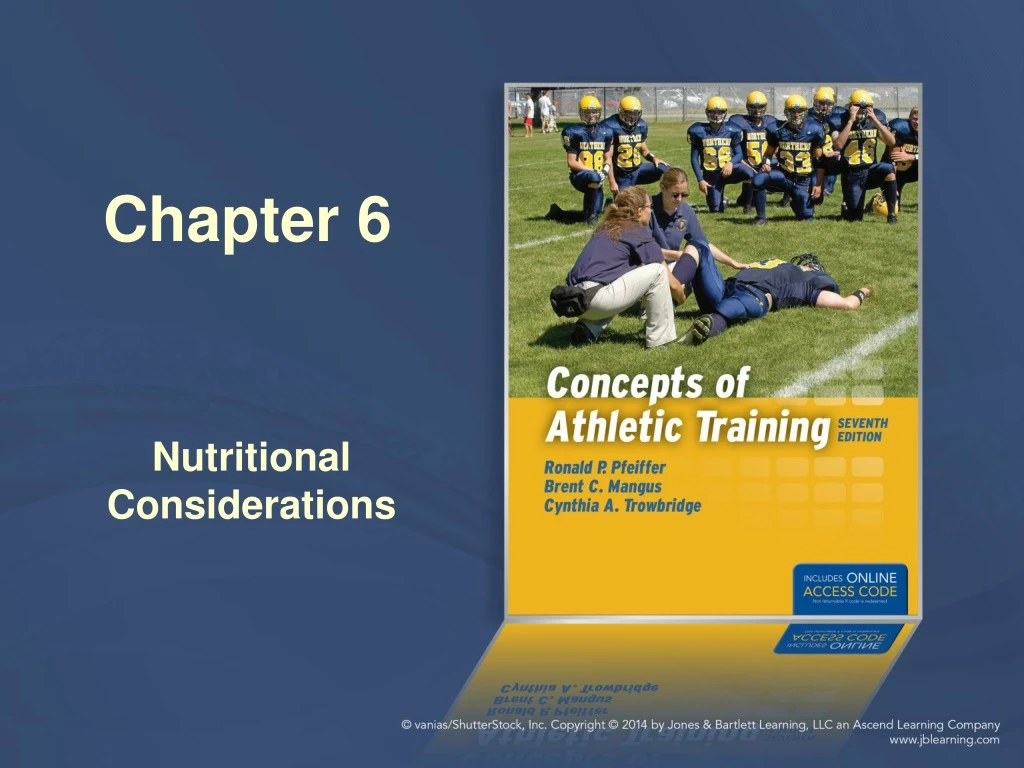
Chapter 6 Nutritional Considerations
Nutrition • Diet influences every aspect of sports participation. • Certified athletic trainers and strength & conditioning coaches are most knowledgeable about nutrition. • ___________________________________________________________________________________________________
Knowledge of Nutrition • Recent studies (Jacobson et al., 2001; Froiland et al., 2004) • Demonstrated that athletes may be receiving better nutritional education from more reliable sources. • But there is still education to be done because Jacobson et al (2001) reported that only 55% of college athletes received nutritional advice always or often during their college careers.
Eating for Sport Performance • Academy of Nutrition and Dietetics indicates that eating properly will: • help you train longer and at a higher intensity • delay the onset of fatigue; promote recovery • help your body adapt to workouts • improve body composition and strength • enhance concentration • help maintain healthy immune function • reduce the chance of injury • reduce the risk of heat cramps and stomach aches.
Overview of Nutrients Macronutrients • - • - • - Micronutrients • - • - Water
Caloric Intake (Rest + Activity)(Sammarone Turocy et al., 2011) • Caloric intake should be based on the body weight goal. • Total caloric intake should be determined by calculating the basal metabolic rate (BMR) and the energy needs for activity. • The metabolic qualities of the activity should be considered when calculating the need for each energy-producing nutrient (carbohydrates, fats, proteins).
Carbohydrates • Carbohydrates (CHO) provide energy for high-intensity exercise • Experts recommend __% to __% of daily calories be supplied by CHO. • Each gram of CHO provides 4 kilocalories. • Average person stores approximately 1500 to 2000 kcals of CHO, the majority of which is in the form of muscle and liver glycogen. Small portion available as blood glucose. • CHO are now classified on how fast they are oxidized. Known as the ________________.
Carbohydrates • CHO derived from plant sources, primarily grains, seeds, fruits, and vegetables. • Simple CHO – ________________ • Typically stimulate insulin release and blood glucose fluctuations. • Foods containing are high caloric and often referred to as empty calories. • Complex CHO – _________________ • Whole-grain cereals & breads, vegetables, and fruits. • Dietary fiber (indigestible CHO) essential for digestion.
Carbohydrates • Simple and complex CHO are suitable to describe foods, but these do not represent the way they are hydrolyzed and absorbed by the body. • ______ Glycemic Index CHO • Cause a steadier rise and decline in blood glucose and insulin. Best for weight management and overall diet. • _______ Glycemic Index CHO • Typically result in a large and rapid rise in blood glucose and insulin, followed by a rapid decrease in blood glucose. Best for refueling after event.
Carbohydrate Loading • Carbohydrate loading can benefit athletes involved in aerobic sports, especially activities lasting ___minutes or more. • Properly executed regimen of CHO loading can boost the level of stored glycogen. • ____ week prior to the competition and includes a gradual tapering of physical activity accompanied with a slight increase in CHO ingestion.
Fats (________) • Fats are needed for energy, insulation, and protection of organs. • Fatty acids and glycerol make up fats. • Fatty acids: Saturated and Unsaturated • Experts recommend that fats compose __% or less of total calories. __% saturated • Each gram of fat supplies 9 kilocalories.
Fats • _________ - all of the available bonding sites on the fatty acid molecule are occupied by a hydrogen atom. Derived from animal sources (i.e., beef, pork, poultry, and dairy products). Generally solid at room temperature. • __________ fats are structured in such a way as to prevent all of the available bonding sites from being occupied by a hydrogen atom. Plant based. Generally liquid at room temperature.
Proteins • Proteins are needed for tissue construction, enzyme reactions, and energy during prolonged exercise. • Experts recommend that proteins compose 10-15%. • Each gram of protein supplies 4 kilocalories. • Proteins are composed of amino acids • __ different amino acids are used to make thousands of proteins. • __ are essential amino acids, which cannot be synthesized by the body and must be ingested in the diet.
Proteins • ______________________________________________________. • Athletes who are on vegetarian diets must take care to eat foods in the correct combination to provide all of the essential amino acids. • A solution to the problem is for such athletes to include either eggs (ovolactovegetarian), milk products (lactovegetarian), or both to ensure adequate supplies of essential amino acids.
Protein Supplementation • Protein supplementation is not recommended because: • Increase saturated fat in the diet • Overstress the liver and kidneys. • NO scientific evidence that protein supplements enhance muscles. • During intense training, 1.2-1.8 grams protein/kg body weight are recommended. • 0.83-1.2 g/kg for sedentary or light exerciser • Normal diet provides adequate protein consumption for intense training.
Vitamins • Vitamins have various functions • Regulate biochemical reactions (energy metabolism and cell and tissue generation) • Serving as antioxidants that protect cell structure. • Vitamins contain no caloric value and a balanced diet. supplies the RDA. • There are water- and fat-soluble types of vitamins. • Water soluble: Vitamins __________________________ • Fat soluble: vitamins ___________
Minerals • Minerals are elements needed for various body functions. • _________________________________________________________________________________ • There is no scientific evidence to support taking minerals in excess of RDA for performance. • But endurance athletes may be at an increased risk of iron or calcium deficiency • Iron and Calcium RDAs • Iron:10 mg for males and 18-20 mg for females Calcium: 1500 mg
Vitamins and Minerals Athletes who do not eat a balanced diet should be advised to include a vitamin and mineral supplement. • A convenient method of supplementation is a daily multivitamin • Megadoses of vitamins/minerals should be avoided and could result in severe consequences
Water (H2O) • Water is necessary for human performance, as well as survival. • ________________________________. • Water lost during exercise needs to be replaced to maintain body’s fluid balance. • A reduction of body weight of 2-5% can impair function. • Current recommendations are for every 1 lb lost due to sweating, 20-24 oz. of water be consumed.
Nutritional Knowledge: The Research • Athletes are largely uneducated regarding proper nutrition, even though they understand the importance of adhering to a quality diet. (Torres-McGehee et al., 2012) • Sources information come from family members (32%), fellow athletes (32%), athletic trainers (ATs; 30%), dietitians (30%), coaches (28%), and TV, radio, or the Internet (10%) to obtain their information. (Froiland et al., 2004) • Hilton (2005) reported that 70% of university athletes (n = 345) are falling short of their daily caloric needs.
Female Athletes • As more women become involved in organized sports, concerns have been raised regarding their special nutritional considerations. • Especially those involved in aesthetic sports that place an emphasis on being lean, such as gymnastics, diving, and dancing. • Greenleaf and colleagues (2009) determined that 54% of college athletes were dissatisfied with their current weight. • Clinical disordered eating: 47% in lean sports; 20% in “non-lean” sports
Endurance Sports ___________________:Athletes not consuming enough calories. A new concern emerging in athletics. • Athletes with athletic energy deficit will be unable to support vital body functions including bone growth. • With insufficient energy post exercise repair is inhibited, hormones affected, amenorrhea and slower/poor bone growth. • Other adverse health-related consequences include: depression, lethargy, attention deficits, sleep disorders, and increases in body fat.
Wrestling • Wrestling is one of only a few sports that match participants on the basis of weight. • Wrestlers often follow unhealthy weight loss procedures to compete in lighter weight categories. • Rapid weight loss occurs via dehydration. • Dehydration occurs through the use of laxatives and diuretics, fluid restriction, artificially induced sweating, and starvation. • No definitive proof that such tactics actually present an advantage.
Wrestling • Short-term effects of repeated bouts of extreme weight loss include: (Nelson, 1989; Williams, 1992) • _ • - • - • - • Speculative long-term effects may include interference with normal growth and development.
Conclusions (ACSM, 2009; McArdle et al., 2009) • Athletes do not consume the proper proportions of nutrients • CHO amount depends on the athletes daily expenditure, sport, gender, and conditions • Protein needs can be met through diet alone • Athletes eat too much “junk food” • Athletes in sports that require lean bodies tend to eat diets with insufficient calories • Most athletes’ diets are deficient in important minerals, i.e., calcium, iron, & zinc.
What Can the Coach Do? • Coaches are an important source of nutrition information. • People planning to enter the coaching profession should take at least one basic college nutrition course. • Attend in-service meetings, professional conferences, or community education programs in sports nutrition. • Subscribe to professional journals that include nutrition articles.
What Can the Coach Do? • Locate nutrition experts, including dietitians, university nutrition faculty, or sports medicine staff. • Implement peer-led programs like Athletes Targeting Healthy Exercise & Nutrition Alternatives (ATHENA). (Eliot et al., 2008) • Have athletes keep a record of their diet that is reviewed periodically by a person knowledgeable in nutrition. • When working with children, discuss nutritional needs of the athlete with parents.
General Dietary Guidelines for Athletes • Tailored to meet individual needs • Nutrition should prepare athletes for: practice, competition and recovery • Educated to make proper food selection and informed supplement using interactive resources Sports, Cardiovascular, and Wellness Nutrition practice group (http://www.scandpg.org)
Precompetition Diets • Foods eaten just before a contest will contribute virtually nothing to performance. • Experts recommend that the typical pregame meal should be eaten no later than _ to _ hours prior to the contest. (ACSM, 2009) • Eat low-fat, easy-to-digest foods. • Liquid meals increase hydration and are less likely to cause bloating or “heavy” feeling. • Foods should provide _______________________________________. (McArdle et al., 2009)
Nutrition During Competition • One hour of highly intense exercise can reduce liver glycogen by 55% and 2 hours can almost completely deplete both liver and muscle glycogen. • CHO consumption during long-duration exercise (1 to 3 hours at 70% to 80% VO2max ) allows muscle cells to rely on blood glucose for energy. • Recommended fluid source of CHO is 8 oz. of a 5% CHO solution consumed every 15-20 min. Especially for morning workouts.
Nutrition After Competition • Dietary goals are to replace muscle glycogen and ensure quick recovery. • A carbohydrate intake of approximately 1.0–1.5 g/kg body mass (0.5–0.7 g/lb) during the first 30 min and again every 2 h for 4–6 h will be adequate to replace glycogen stores. • Timing of CHO ingestion is important as glycogen levels will replenish faster if the food is consumed within 30 minutes – 1 hour. • Protein consumed after exercise will provide amino acids for building and repair of muscle tissue.
Nutrition and Injury Recovery • Weight gain is a concern with forced inactivity due to injury. • Athletes who are ill/injured should not reduce total caloric intake as metabolism may increase as the body repairs itself. • Recommend cross training during recovery. • Runners can ride stationary bikes or run in swimming pools. • Those with infectious illnesses and unable to exercise should establish a caloric intake based on their BMR until they are healthy.
(Bucci, 1995; Harrison, n.d.) Nutrition and Recovery • ___________________________________. • _______ (amino acids) contain the building blocks for connective tissue and muscle. • Anti-inflammatory foods encouraged: garlic, cocoa, tea, blueberries, pineapple • Proteolytic enzymes are known to inactivate bradykinins, reduce viscosity of extracellular fluid, and help molecular debridement): cheese, rye, papaya • Free fatty acids contain eicosanoids, which can reduce pain, cause vasodilation and enhance the immune system
Managing Body Weight • Body weight consists of water, fat, and lean tissue. • Muscle is denser than fat. • In order to maintain weight an athlete’s caloric intake must equal caloric expenditure. • Consume too many calories per day the excess calories are converted to fat. Too few, stored fat will be metabolized to form energy. • Severe caloric restrictions (fasting) result in protein breakdown. • Athletes should only weigh themselves once/week at the same time of day and after going to the bathroom.
Managing Body Weight • Percentage of body fat = the ratio of fat to lean body weight • Better measurement for weight management and is commonly referred to as body composition. • Ranges for most active young females are 14-24% and active young males are 7-17%. • Lowest reference body fat for males is 5% and in females it is 12% (Sammarone Turocy et al., 2011) • NATA position statement “Safe weight loss and maintenance practices in sport and exercise” (Sammarone Turocy et al., 2011) is an excellent resource
Supplements and Ergogenic Aids • Supplements have become very popular with athletes of all calibers. • Marketed to make athletes think they will improve their personal performance and reach their goals faster. • It is important for the consumer to evaluate the marketing claims, research studies, and safety issues associated with ergogenic aids. (Manore, Meyer, and Thompson, 2009) • Many pose adverse health risks or are illegal and their use will result in disqualification or other penalties.
Nutritional Supplements • NATA released two comprehensive position stands evaluating dietary supplements (Buell et al., 2013) and anabolic-androgenic steroids (Kersey et al., 2012) • Food first philosophy • Dietary Supplement Health and Education Act (DSHEA) of 1994 • Supplements can be divided into two categories: Legal and Illegal
Nutritional Supplements Stimulants are often the most popular legal supplements for ergogenic purposes. • __________- Touted to be a safe aid and can provide a boost of energy for the athlete. • Creatine – ______________________________________________________________ • ________– some cause muscle building and repair, excess may stress the urinary system. • Herbals – may produce stimulatory and/or calming effects but may have adverse interactions with other drugs.
Anabolic-Androgenic Products • Illegal supplements include the following but are are mostly legal products when used in therapeutic doses under physician or veterinarian's care. • ___________– high doses build muscle but have many adverse effects • Erythropoietin (EPO) ______________________________________ • _________ – stimulants that block fatigue messages to the brain, associated cardiac problems • Gammahydroxybutyrate (GHB) – deep sleep aid, suggested HGH is released in this sleep cycle