Understanding Statistical Power in Research: The Importance of Sample Size and Significance
Statistical power is the likelihood of detecting an effect of a specific magnitude through significance testing. In a light-hearted conversation, two students discuss their research struggles, particularly focusing on a correlation of 0.65 that lacks statistical significance due to a small sample size of only eight subjects. This scenario highlights the critical relationship between sample size and the ability to achieve significant results, stressing the necessity for adequate sample sizes to enhance research credibility and success. Additionally, the principles of graphical excellence serve as a reminder of effective data presentation.

Understanding Statistical Power in Research: The Importance of Sample Size and Significance
E N D
Presentation Transcript
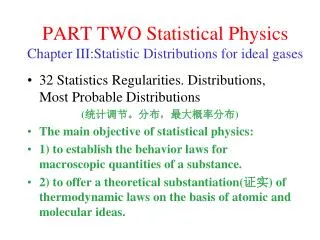
Statistical power is… …the probability of being able to detect (through statistical significance testing) an effect of a specified magnitude.
Scenario • Student 1: So how’s the big “D” going?
Scenario • Student 1: So how’s the big “D” going? • Student 2: I just ran the correlation between my two measures. The correlation is .65, but darn it, it’s not significant, and my advisor tells me that I can’t get my degree until I have significant results.
Scenario • Student 1: So how’s the big “D” going? • Student 2: I just ran the correlation between my two measures. The correlation is .65, but darn it, it’s not significant, and my advisor tells me that I can’t get my degree until I have significant results. • Student 1: Bummer. You are a loser!
Scenario • Student 1: So how’s the big “D” going? • Student 2: I just ran the correlation between my two measures. The correlation is .65, but darn it, it’s not significant, and my advisor tells me that I can’t get my degree until I have significant results. • Student 1: What was your sample size?
Scenario • Student 1: So how’s the big “D” going? • Student 2: I just ran the correlation between my two measures. The correlation is .65, but darn it, it’s not significant, and my advisor tells me that I can’t get my degree until I have significant results. • Student 1: What was your sample size? • Student 2: I had 8 subjects.
Scenario • Student 1: So how’s the big “D” going? • Student 2: I just ran the correlation between my two measures. The correlation is .65, but darn it, it’s not significant, and my advisor tells me that I can’t get my degree until I have significant results. • Student 1: What was your sample size? • Student 2: I had 8 subjects. • Student 1: You miserable fool! …
= d x f (N) = d (N-1)1/2 = ρ (N-1)1/2
Graphical Data Displays and Interpretation 2012 November 14
John Tukey (1977), Exploratory Data Analysis. Edward Tufte, The Visual Display of Quantitative Information.
John Tukey (1977), Exploratory Data Analysis. Edward Tufte, The Visual Display of Quantitative Information.
Tufte Principles of Graphical Excellence Graphical excellence is the well-designed presentation of interesting data -- a matter of substance, of statistics, and of design. Graphical excellence consists of complex ideas communicated with clarity, precision, and efficiency. Graphical excellence is that which gives to the viewer the greatest number of ideas in the shortest time with the least ink in the smallest space. Graphical excellence is nearly always multivariate. Graphical excellence requires telling the truth about the data.
Figure 6 “White space”
Graphical Excellence Awarddeadline: NEXT CLASS • Find an example of graphical excellence that tells a story in a simple, elegant manner. • Or… find a real dog of an example from which we can learn what not to do.
Happy Thanksgiving break!(in the spirit of hideous graphics)