The Impact of Civil War Amendments on Civil Liberties and Voting Rights in the U.S.
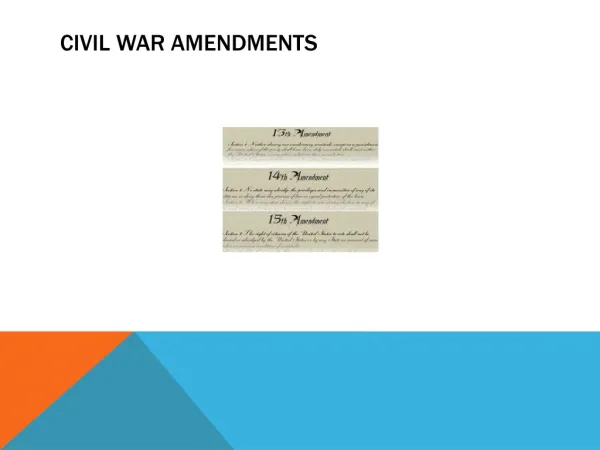
The 13th, 14th, and 15th Amendments, passed following the Civil War, significantly advanced civil liberties and voting rights for marginalized groups. The 13th Amendment abolished slavery; the 14th ensured all citizens received equal protection under the law, along with due process; and the 15th prohibited voting discrimination based on race. Additional amendments, like the 19th (women's suffrage) and 26th (vote at 18), further expanded electoral rights. These changes reshaped the American electoral process and promoted inclusivity, redefining citizenship in the U.S.

The Impact of Civil War Amendments on Civil Liberties and Voting Rights in the U.S.
E N D
Presentation Transcript
Furthering Civil Liberties • 4. Components of 14th Amendment: • -A citizen is anyone “born or naturalized in U.S. • -Every state must give all citizens “equal protection of the laws” • -State gov’t could not take unreasonable action or interference with U.S. citizens • Due Process Clause- States cannot take “life, liberty, and property” unless due process is followed • 1. Three amendments, 13th, 14th, and 15th were passed after the Civil War • 2. 13th Amendment • (1865)- Outlawed slavery • 3. 14th Amendment • (1868)- designed to get rid of black codesblackcodes
Furthering Civil Liberties • 5. 15th Amendment-15thNo state could deny a person the right to vote based on race • Guaranteed suffrage • The amendment was only aimed at African American men
Electoral Process and Voting Rights • 9. 23rd Amendment- gave citizens of Washington D.C. the right to vote for president and vice president • 10. 24th Amendment- made poll taxes illegal during national elections • Poll Tax- a fee that African Americans had to pay in order to vote • Those who could not afford the tax could not vote • 6. These amendments changed the way elections were conducted • 7.1117thAmendment- Allowed direct election of senators by the people • 8. 19th Amendment- (1920)-granted women the right to vote • Susan B. Anthony and Elizabeth Stanton • 1869-state of Wyoming first gave women this right
Electoral Process and Voting Rights • 11. 26th Amendment • 6t(1971)- guaranteed the right to vote to citizens 18 years and older • Changed from the previous age of 21 in most states • Young men could fight in wars but not vote at home