Download
1 / 13
140 likes | 253 Vues
This text explores how geography influenced the growth of ancient Indian civilizations, particularly focusing on the Indus Valley and its major urban centers like Harappa and Mohenjo-Daro. It discusses the impact of monsoons, river systems, and geographical features such as the Himalayas and Tharr Desert on agriculture, trade, and societal organization. The text highlights public works projects that showcase advanced urban planning and infrastructure, emphasizing the importance of geography in shaping the life and culture of early Indian societies.

E N D
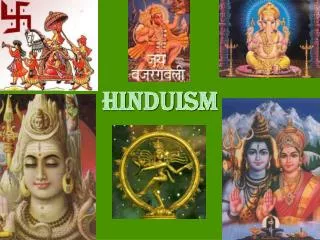
Ancient Indians and Hinduism Ancient Cities Geography Pluralistic Religion
The Geography of the Indus Valley alluvial plain The Rann (Greater) (Lesser) In what ways did geography impact the development of the Indus Valley?
Public Works Projects of Mohenjo-Daro and Harappa sewage system public wells What can we deduce about this civilization based on these ruins?
In what ways do the season monsoons affect the Indian subcontinent?
The Geography and Climate of the Indian Subcontinent Hindu Kush Khyber Pass Indus River Ganges River Tharr Desert Kutch Himalayas Deccan Plateau Western Ghats Eastern Ghats Indian Ocean Bay of Bengal Khyber Pass China Afghanistan Tibet Hindu Kush Bhutan Tharr Desert Pakistan Nepal Iran Kutch Myanmar India Bangladesh Indian Ocean Bay of Bengal
Current Agricultural Use and Population Concentration of the Indian Subcontinent
The Eastern Ghats Rice paddies in valley of the Eastern Ghats, Orissa, India, Asia The river near the Gogarbham Dam in Tirumala, Chittoor district, Andhra Pradesh, India Visakhapatnam, Beach Road from Kailashagiri
Western Ghats The Western Ghat hills at Matheran in Maharashtra, India The Shola Grasslands and forests in the Kudremukh National Park, Western Ghats, India. The Jog Falls in Karnataka, one of the most spectacular waterfalls in India. Western Ghats as seen from Gobichettipalayam
Between 2500 and 2000 BC:Indo-Europeans migrated all over Eurasia