Understanding Cells: The Building Blocks of Life and Their Structures
Cells are the basic units of structure and function in living organisms, varying in size from 0.2 micrometers in mycoplasma to 1 meter in nerve cells. They can be categorized into two major types: prokaryotic cells, which lack a nucleus and organelles, and eukaryotic cells, which contain both. Eukaryotic cells have several important parts such as the cell membrane, cell wall (in some organisms), nucleus, and cytoplasm. Understanding these structures is crucial for exploring the diversity of life and the complex functions that sustain living organisms.

Understanding Cells: The Building Blocks of Life and Their Structures
E N D
Presentation Transcript
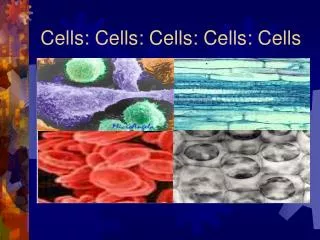
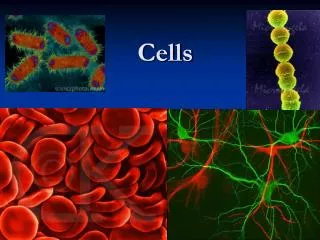
CELLS • Basic unit of structure and function of living things. • Many sizes: Average is 5-50 micrometers (µm) • Nerve cell in leg (1 m) • Mycoplasma (0.2 micrometers = 1 millionth of a meter) • Human egg no bigger than “dot” on letter i • Eggs are a single cell (Largest single cell is an ostrich egg) • Red blood cell 1/10 egg cell • Common bacteria (fit 8,000 inside a red blood cell) • Many shapes:
PROKARYOTE vs. EUKARYOTE Prokaryotic Cell lacks internal structures: • No nucleus (just DNA) • No organelles (cell parts) Eukaryotic Cell has internal structures: • nucleus • Organelles
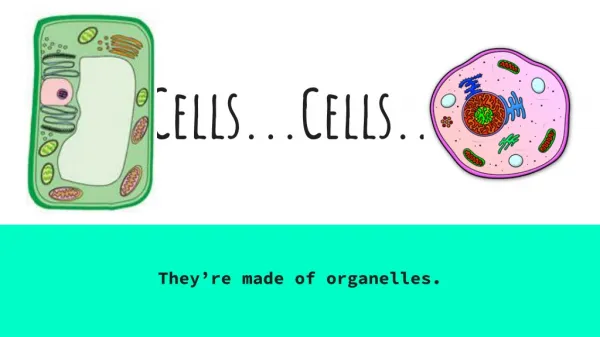
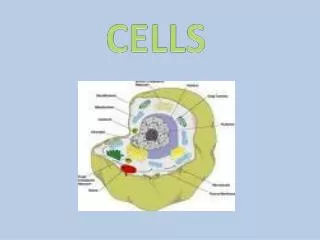
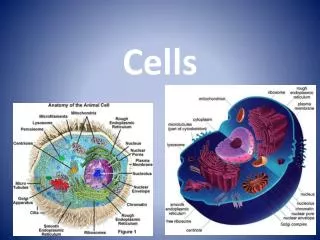
Basic Parts to a Eukaryotic Cell • cell (plasma) membrane • cell wall(only certain organisms) • nucleus • cytoplasm
Cell (plasma) Membrane • regulates what comes in and out of a cell, aids in protection and support. • made of a bilayer of lipids • proteins (stick in membrane or move around) act as channels and pumps • carbohydrates (attached to proteins or lipids) act as chemical identification cards
Cell Wall • surrounds cell membrane in plants, algae, and some bacteria. • support and protection • very porous allowing water, food, air, and other substances to pass through • made of 2 or more layers • first layer to form is where two plant cells meet (gluey substance called pectin holds together) • primary layer is after pectin made of cellulose (elasticity) • secondary layer made of cellulose and lignin (wood)
Nucleus • control center of cell • contains genetic material
Cytoplasm • living area between nucleus and cell membrane • usually a thicker substance • contains many important structures