The Evolution of Microscopes and Cell Structures
Discover how the invention of microscopes revolutionized our understanding of cells and the cell theory, and explore the various structures and functions within cells.

The Evolution of Microscopes and Cell Structures
E N D
Presentation Transcript
Long, Long Ago…. • Before microscope, people thought that diseases were caused by curses and supernatural spirits • Microscopes enabled scientists to view and study cells • Anton VanLeeuwenhoek – developed the 1st light microscope
Today’s microscopes • Today we have much more advanced microscopes • Compound light microscope – series of lenses to magnify objects • SEM (Scanning Electron Microscope) – scans the surface of cells • TEM (Transmission Electron Microscope) – see structures inside the cell
Cell Theory • All organisms are composed of cells • All cells come from other living cells • Cells are the basic unit of structure and function
Homeostasis • All organisms must maintain a balance regardless of internal and external conditions • This task is controlled by the plasma membrane
Plasma Membrane • The plasma membrane serves as the boundary between the cell and its environment • Allows specific amount of nutrients to enter and allow waste to exit
Characteristics of cell membrane • Selectively permeable – allows some molecules to enter and keeps others out • Like a screen door
Plasma Membrane • Made up of two layers of phospholipids • Controls what moves into and out of the cell • Selectively permeable • AKA: Lipid Bilayer, Fluid Mosaic, Cell Membrane
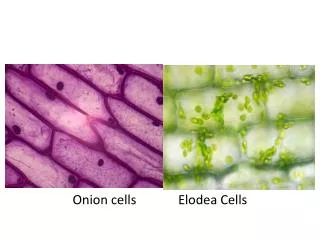
Cell Wall • Rigid structure • Located outside of plasma membrane • Found in plant cells, fungi, some bacteria and protists • Provides support and protection • Composed of cellulose (carbohydrate)
Two Basic Cell Types • Prokaryote • Eukaryote
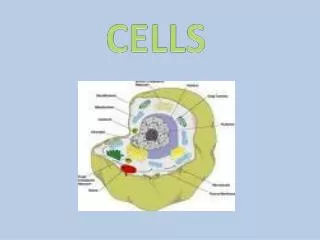
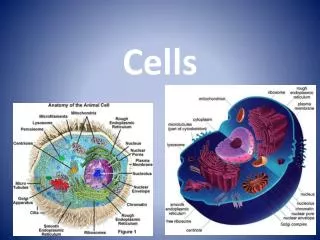
Nucleus • Control center of the eukaryotic cell • Contains directions to make proteins • Chromatin – strands of genetic material (DNA)
Nucleolus • Structure within the nucleus • Produces ribosomes
Ribosomes • The site of protein synthesis • Found in the cytoplasm or on the Endoplasmic Reticulum
Cytoplasm • Clear, gelatinous fluid inside the cell • Helps suspend organelles
Endoplasmic Reticulum • Site of cellular chemical reactions • Series of highly folded membranes • Rough Endoplasmic Reticulum – have ribosomes attached • Smooth Endoplasmic Reticulum – does not have ribosomes attached
Golgi Apparatus • AKA: Golgi Body • Flattened system of tubular membranes • Modifies and packages proteins • Sort proteins to be sent to appropriate destination
Vacuoles • Temporary storage of materials • Store food, enzymes, other materials needed by the cell, and waste • Plant cells usually have one large vacuole, animal cells usually contain many smaller vacuoles
Lysosomes • Contain digestive enzymes that digest excess or worn out organelles, food particles, viruses and bacteria
Chloroplasts • Found in the cells of green plants • Organelle that captures light energy and produces food to store for later use • Contains chlorophyll – gives plants their green color
Mitochondria • Organelles that transform energy for the cell • Double membrane structure with highly folded inner membrane
Cytoskeleton • Support structure for the cell • Composed of microtubules and microfilaments • Helps cell to maintain shape
Cilia and Flagella • Aid in locomotion or feeding • May move the entire cell, or aid in movement of substances across the cell surface
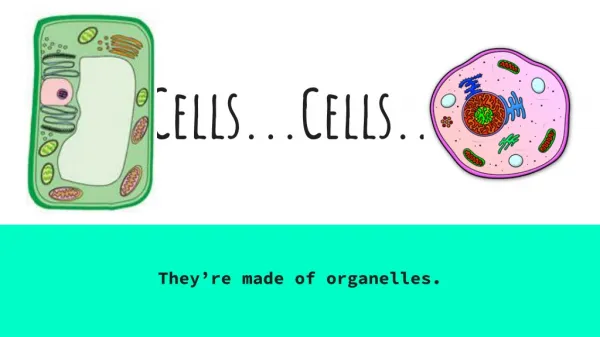
Animal Cells - Don’t have a cell wall - Contain centrioles - Contain many small vacuoles Plant Cells - Generally larger than animal cells - Have a cell wall - Contain chloroplasts - Have one large central vacuole Plant and Animal Cells Critical Thinking : Why are plant and animal cells similar?
Advantages of highly folded Membranes • Folded membranes are an advantage to a cell because • Cell processes can be more efficient • Membranes provide a larger surface area for cell process to take place • Remember all cell membranes are made up of phospholipids and by controlling what goes in and out of the membrane they help the cell maintain homeostasis