Understanding Cellular Processes: Photosynthesis, Respiration, and Division
This educational resource provides a comprehensive overview of essential cellular processes, including photosynthesis, cellular respiration, and cell division. Each section explores key concepts, such as the theory of endosymbiosis, the light-dependent and independent reactions of photosynthesis, and the stages of aerobic respiration. Key terms are defined, and questions are presented to reinforce understanding. This is an ideal study guide for students or anyone interested in molecular genetics, evolution, and the classification of cells.


Understanding Cellular Processes: Photosynthesis, Respiration, and Division
E N D
Presentation Transcript
Cell Respiration
The Cell Photosynthesis Respiration Cell Division Molecular Genetics Evolution And Classification $100 $100 $100 $100 $100 $100 $200 $200 $200 $200 $200 $200 $300 $300 $300 $300 $300 $300 $400 $400 $400 $400 $400 $400 $500 $500 $500 $500 $500 $500 Double Jeopardy!
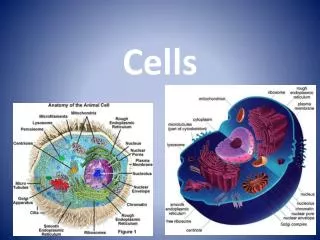
Cells It has a nucleus, membrane bound organelles, and larger ribosomes. $100
Cells What is an eukaryote? $100 Back
Cells The site of protein synthesis resulting from the attached ribosomes. $200
Cells What is a rough endoplasmic reticulum? $200 Back
Cells Eukaryotic cells emerged when mitochondria and chloroplasts, Once prokaryotes, took up permanent residence inside other Larger cells, about one and a half billion years ago. $300
Cells What is the theory of endosymbiosis? $300 Back
Cells Molecules embedded in the interior of the phospholipid bilayer To stablize the membrane. $400
Cells What is cholesterol molecules? $400 Back
Cells A cell junction that are belts around the epithelial cells that line Organs and serve as a barrier to prevent leakage into or out of those Organs. In the urinary bladder, they prevent the urine from leaking Out of the bladder. $500
Cells What is tight junctions? $500 Back
Photosynthesis The two main processes of photosynthesis. $100
Photosynthesis What is light reactions and the light- independent reactions? $100 Back
Photosynthesis Membranes in chloroplasts that make up the grana, the site of the Light reactions. $200
Photosynthesis What is thylakoids? $200 Back
Photosynthesis The Calvin cycle does not directly depend on light. Instead, it uses The two products of the light reactions. $300
Photosynthesis What is ATP and NADPH? $300 Back
Photosynthesis These plants keep their stomates closed during the day and open At night, to reduce excess water loss. $400
Photosynthesis What is crassulacean acid metabolism plants (CAM plants)? $400 Back
Photosynthesis When the chloroplast runs low on ATP, this replenishes the ATP Levels. It does not produce NADPH and no oxygen is released. $500
Photosynthesis What is cyclic photophosphorylation? $500 Back
Cell Respiration ATP consists of these things. $100
Cell Respiration What is adenosine(adenine plus ribose) and three phosphates? $100 Back
Cell Respiration Aerobic respiration consists of these stages, in order. $200
Cell Respiration What is glycolysis, Krebs cycle, the electron transport chain, and Oxidative phosphorylation? $200 Back
Cell Respiration These 3 processes: glycolysis, Krebs cycle, and electron transport chain happen in different locations. $300
Cell Respiration What is cytoplasm for glycolysis, inner matrix of mitochondria For Krebs cycle, and cristae membrane for ETC? $300 Back
Cell Respiration Human skeleton carries out this when the blood cannot supply enough oxygen to muscles during strenuous exercise. $400
Cell Respiration What is lactic acid fermentation? $400 Back
Cell Respiration Each turn the Krebs cycle releases these things. Two turns occur Per glucose molecule. $500
Cell Respiration What is 3 NADH, 1 ATP, 1 FADH, and the waste product CO2.? $500 Back
Cell Division This produces two genetically identical daughter cells and Conserves the chromosome number(2n). $100
Cell Division What is mitosis? $100 Back
Cell Division The cell cycle consists of these five major phases. $200
Cell Division What is G1, S, and G2 (which is the interphase), mitosis, and cytokinesis? $200 Back
Cell Division These are the three types of genetic variation result from the Processes of meiosis and fertilization. $300
Cell Division What is independent assortment, crossing over, and random fertilization? $300 Back
Cell Division In animal cells, during anaphase, this forms down the middle of the cell. $400
Cell Division What is a cleavage furrow? $400 Back
Cell Division In meiosis, synapsis is important for these two reasons. $500
Cell Division What is ensuring that each daugher cell will receive one homologue From each parent and making possible the process of crossing over? $500 Back
Molecular Genetics This is the process by which the codons of an mRNA sequence Are changed into an amino acid sequence. $100
Molecular Genetics What is translation? $100 Back