Cells
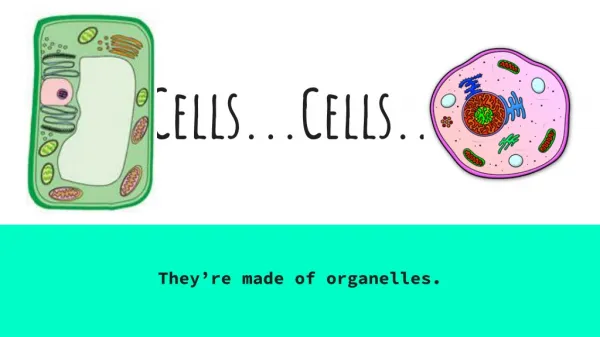
This guide explores the fundamental building blocks of life, focusing on the major parts of animal and plant cells. Key components include the cell membrane, which regulates material movement, the cytoplasm (a jelly-like substance), and the nucleus, the command center of the cell. Animal cells contain mitochondria for energy production and vacuoles for storage. In contrast, plant cells have unique structures such as the cell wall, which maintains shape, and chloroplasts, essential for photosynthesis. Discover the vital roles these components play in cellular function.
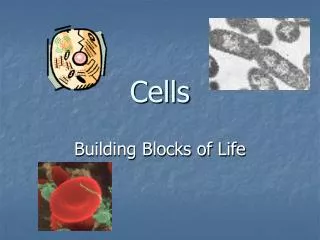

Cells
E N D
Presentation Transcript
Cells Building Blocks of Life
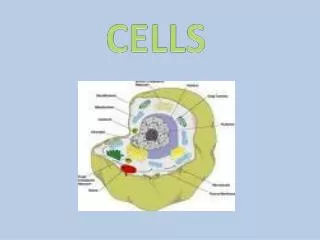
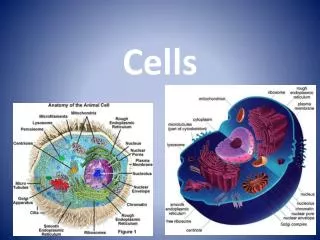
Animal CellsMajor Parts • Cell Membrane- Surrounds the cell and directs material in and out of the cell • Cytoplasm-Jellylike substance floating in the cell, made of mostly water • Nucleus-Command Center • Mitochondria-Help release energy • Vacuole-Storage area inside the cytoplasm
Animal • Cell
Plant CellMajor Parts(Also in Animal Cells) • Cell Membrane- Surrounds the cell and directs material in and out of the cell • Cytoplasm-Jellylike substance floating in the cell, made of mostly water • Nucleus-Command Center • Mitochondria-Help release energy • Vacuole-Storage area inside the cytoplasm
Plant • Cell
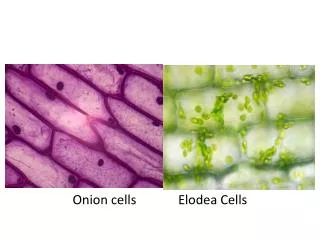
These are in Plant Cells ONLY • Cell Wall-Stiff structure surrounding the cell membrane. The cell wall enables the cell to hold its shape. • Chloroplasts-Give plants their green color; used in the process of photosynthesis cell wall
Point to Remember. . . • The cell wall and chloroplasts are found ONLY in PLANT CELLS.