
Understanding Prokaryotic and Eukaryotic Cells: Structures and Functions
E N D
Presentation Transcript
CELLS • 2 TYPES • PROKARYOTIC • EUKARYOTIC • Pro= Before Karya= greek for Kernel or NUCLEUS • Prokaryotic = Before Nucleus –these cells have no nucleus • Eu= True, so- Eukaryotic= true nucleus- these cells have a nucleus
PROKARYOTES • No Nucleus • No Membrane Bound Organelles • Very small- 1-10 um in size • First cellular organisms- 3.5 bya • EUBACTERIA and ARCHAEBACTERIA
EUKARYOTES • True Nucleus • Have organelles • Larger than prokaryotes – 2-1000 um in size • Not as “old” – 1.5 bya • All other types of cells
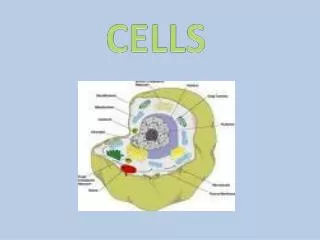
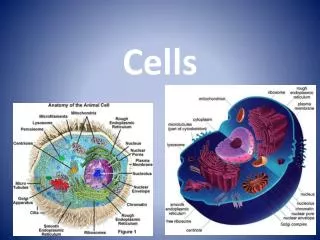
MITOCHONDRIA • Cellular Power Plants- produce energy (ATP) • Made of • 2 membranes • Cristae – folds in inner membrane (increase surface area) • Empty space= Matrix
NUCLEUS • Contains DNA and RNA • Surrounded by double membrane- contains nuclear pores- allow communication with the cell • Contains the NUCLEOLUS- produces ribosomes
ENDOPLASMIC RETICULUM(ER)aka The Intracellular Highway • 2 Types- SMOOTH and ROUGH • ER is continuous w/ nuclear membrane • Smooth- synthesizes parts of membrane, lipids, steroids and ships ‘em out • Rough- (dotted with ribosomes)- Synthesize proteins and passes ‘em on to the GOLGI
GOLGI APPARATUS • Membrane bound structure- flattened sacs • Packaging/Shipping Plant -packages proteins & different molecules in vesicles - transports to other parts of the cell or out
RIBOSOMES • Protein factories- takes RNA from nucleus and makes proteins • Made of 2 subunits • Can be found floating in the cytosol, on the rough ER, or in mitochondria • If in Cytosol- make proteins for use in the cell • If in Rough ER- make proteins to be shipped out
VACUOLES & LYSOSOMES • Vacuole- many kinds • cellular garbage can- holds cellular material and helps release waste • Storage tank • Contractile vacuole (in protists)=water pump • Lysosome- aid in digestion (Lyse- means to break down) • What happens to a tadpoles tail?
CILIA and FLAGELLA • Both function in movement • Both composed of microtubules • Cilia= tiny hairs • Flagellum= cellular tail
CENTRIOLES • Made of microtubules • Play a role in cell division • Help to move chromosomes into new cells
CYTOSOL & CYTOSKELETON • Cytosol- Soupy like substance where all organelles are housed • Cytoskeleton- made of microtubules- maintains cell shape and helps in cell movement
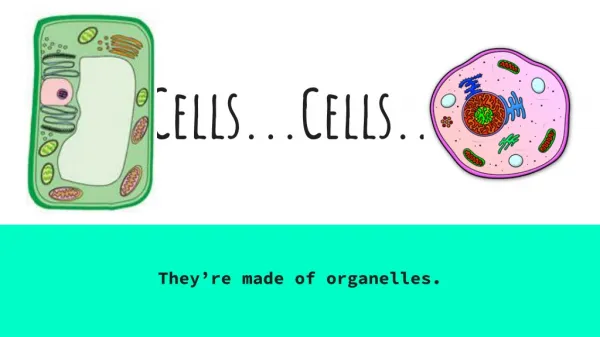
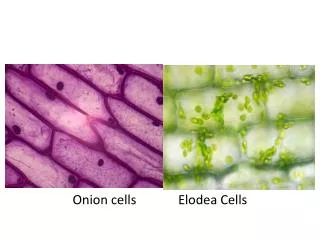
DIFFERENCES IN PLANT CELLS • 1. Chloroplast • 2. Cell Wall • 3. Vacuole
CHLOROPLAST • Found only in plant cells • Where photosynthesis happens • Contain Chlorophyll • Made of 2 parts • Stroma- substance around grana • Grana (grain)- stacks of THYLAKOIDS- where photosynthesis goes down
CELL WALL • Rigid layer of cellulose outside of the cell membrane • Provides 2 things: • PROTECTION • STRUCTURE (why don’t plants fall over?!)
VACUOLE • Much larger in plant cells (1/2-2/3 of cell) • Stores water, sometimes pigments, and other nutrients • Also used for support and holding waste