Understanding Cells: The Building Blocks of Life
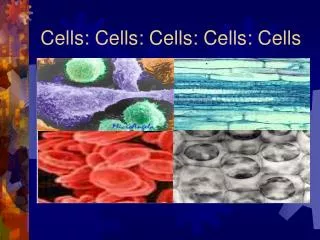
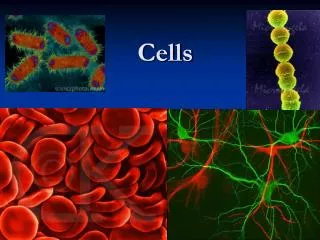
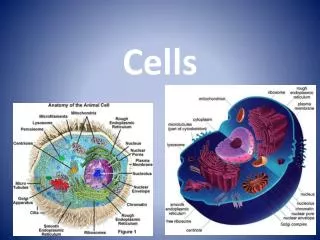
Cells are the smallest units capable of life, classified into single-celled organisms like bacteria and complex multi-cellular structures such as animals, plants, and fungi. Eukaryotic cells have a nucleus and specialized organelles, while prokaryotic cells, represented by bacteria, are simpler and lack a nucleus. Throughout development, cells differentiate into specialized types, performing crucial functions in the human body, including nerve cells for messaging, red blood cells for oxygen transport, and skin cells for protection. This organization creates a complex interplay in bodily systems.

Understanding Cells: The Building Blocks of Life
E N D
Presentation Transcript
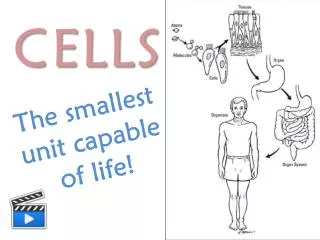
CELLS The smallest unit capable of life!
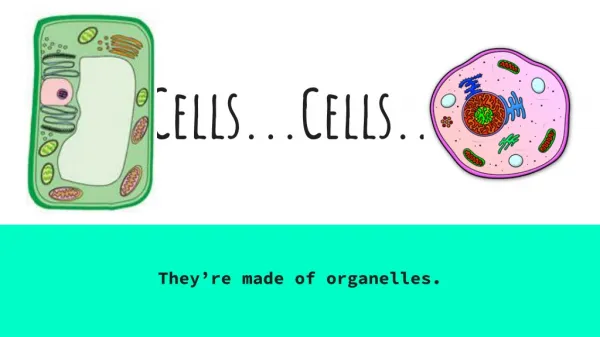
Types of Living Things • Single-celled: simple; uni-cellular; bacteriaand some protists (amoeba & algae) • Multi-cellular: contain SPECIALIZEDcells; some protists, animals, plants, fungi • Eukaryotic cell= all other life; nucleus and other organelles; complex • Prokaryotic cell = BACTERIA ONLY; no nucleus; small, simple, self-sustaining
How Living Things Are Organized living thing NOT living
SPECIALIZATION • Different types of cells form during your development and perform different jobs in your body • Differ in shape, size, function, and life span • a.k.a. Differentiation
1 nerve cells or neurons carry "messages" through the body
2 & 3 red blood cells carry oxygen from lungs to other body cells white blood cells defend body from disease
4 muscle cells lengthen and contract to allow for movement
5 skin cells shield the internal body from germs; control water loss
6 bone cells form the skeleton and support the body
CIRCULATORY SYSTEM lymphatic system cardiovascular system
Comparing Organ Systems Trachea Teeth and saliva Arteries Muscles Ligaments Veins Lungs Cartilage Stomach Capillaries Heart Intestines Bronchi Esophagus Bones Blood