Understanding Cell Structures and Functions in Living Organisms
In this engaging lesson, students will explore and label the parts of various types of cells, including plant, animal, single-celled, and multi-celled organisms. Using magnifiers or microscopes, they will observe cell structures such as the membrane, cytoplasm, nucleus, and chloroplasts. Students will learn to identify the similarities and differences between cells and understand the role of microorganisms, highlighting both beneficial and harmful varieties. This comprehensive approach provides a foundation for understanding the building blocks of life.

Understanding Cell Structures and Functions in Living Organisms
E N D
Presentation Transcript
Standard • S5L3. Students will diagram and label parts of various cells (plant, animal, single-celled, multi-celled). • a. Use magnifiers such as microscopes or hand lenses to observe cells and their structure. • b. Identify parts of a plant cell (membrane, wall, cytoplasm, nucleus, chloroplasts) and of an animal cell (membrane, cytoplasm, and nucleus) and determine the function of the parts. • c. Explain how cells in multi-celled organisms are similar and different in structure and function to single-celled organisms. • S5L4. Students will relate how microorganisms benefit or harm larger organisms. • a. Identify beneficial microorganisms and explain why they are beneficial. • b. Identify harmful microorganisms and explain why they are harmful.
What is a Cell?http://www.scsc.k12.in.us/SMS/Teachers/Martin/replacementlink.htm • All living things are made up of cells. • Each of us has about 50 million million cells - an enormous number which is difficult to imagine. • Each cell is a sort of bag made from a sort of skin called a membrane. • The inside of a cell is watery and jelly-like. • Cells are very small - you can't see them just using your eyes. • You need to use a microscope, which makes them look many times bigger that they actually are.
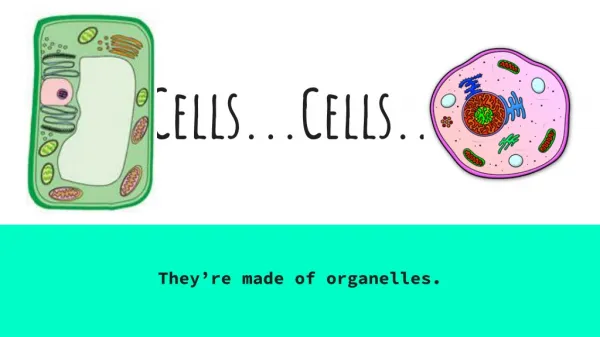
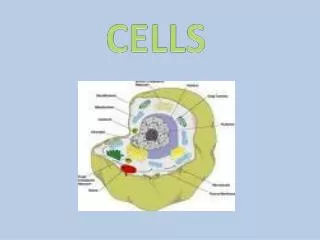
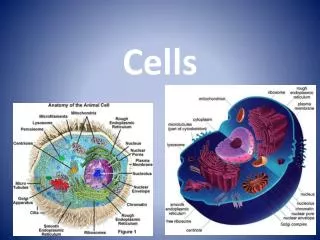
Animal Cell • Nucleus – • directs the cell’s activities • (control center) • Cytoplasm – • a jelly-like substance • that contains chemicals that help the cell stay healthy • Cell membrane- • outer coating • Holds the cell together • Separates the cell from it’s surroundings
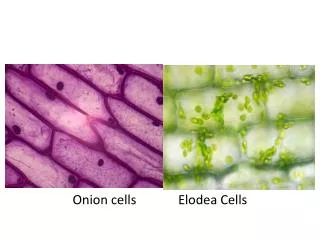
Plant Cell LIKE the animal Cell Only in the plant cell Cell Wall- thick outer layer Protects the cell Supports and gives structure Chloroplast- Makes food for the cell Gives plants the greenish color • Nucleus – • directs the cell’s activities • (control center) • Cytoplasm – • a jelly-like substance • that contains chemicals that help the cell stay healthy • Cell membrane- • outer coating • Holds the cell together • Separates the cell from it’s surroundings
Plant Cell Cell Wall- thick outer layer Protects the cell Supports and gives structure Chloroplast- Makes food for the cell Gives plants the greenish color • Nucleus – • directs the cell’s activities • (control center) • Cytoplasm – • a jelly-like substance • that contains chemicals that help the cell stay healthy • Cell membrane- • outer coating • Holds the cell together • Separates the cell from it’s surroundings
Animal Cell and Plant Cell LIKE the animal Cell Only in the plant cell