Download
1 / 14
140 likes | 303 Vues
This document explores the pivotal events and figures of the American Civil War (1861-1865), focusing on President Abraham Lincoln's efforts to preserve the Union and end slavery through the Emancipation Proclamation. Key topics include the causes of the war, strategies employed by both the Union and the Confederacy, and the significant battles such as Antietam and Gettysburg. Additionally, it highlights the consequences of the war, including Reconstruction and the Civil War Amendments. The document emphasizes the impact of the war on soldiers, civilians, and the nation as a whole.

E N D
THE CIVIL WAR 1861-1865
Abraham Lincoln • 16th president; Republican from Illinois • President during Civil War • Wanted to preserve the Union • Passed the Emancipation Proclamation • Assassinated by John Wilkes Booth on April 15, 1865
Causes Course Consequences Civil War States’ rights Nationalism Sectionalism Secession (CSA: Confederate States of America; President= Jefferson Davis) Slavery Ft. Sumter Anaconda Plan Antietam Gettysburg Vicksburg Sherman’s March to the Sea Appomattox Reunification of N. and S. Reconstruction (1865-1877) Civil War Amendments (13, 14, 15)
War Begins • Election of 1860 • Secession of lower states • Confederate States of America form • Firing on Ft. Sumter • Virginia Secedes followed by ARK, NC, and TN • 11 States leave the Union
Confederacy (South) • War Aims • Fought to win independence • Right to govern themselves • Preserve their way of life • War Strategies • Defensive war of attrition (force Union to spend its resources) • Keep Union off their land • Capture Washington, D.C. • European Recognition
Union (North) • War Aims • Preserve the Union • Eventually to end slavery • War Strategies • Anaconda Plan (Constrictor by Winfield Scott) • Blockade Southern ports • Isolate the Confederacy from trade & aid • Cut off flow of supplies • Exhaust Southern Resources • Control the Mississippi • Divide the Eastern & Western parts of the Confederacy • Capture major cities • Cut off shipping • Destroy the army
Modern War • Calvary • Muzzle Rifles (cone shaped bullets) • Battlefield Formations (trenches & barricades) • Railroads • Telegraphs • Draft (Conscription) • Submarines • Armored Ships • Observation Balloons • Attrition
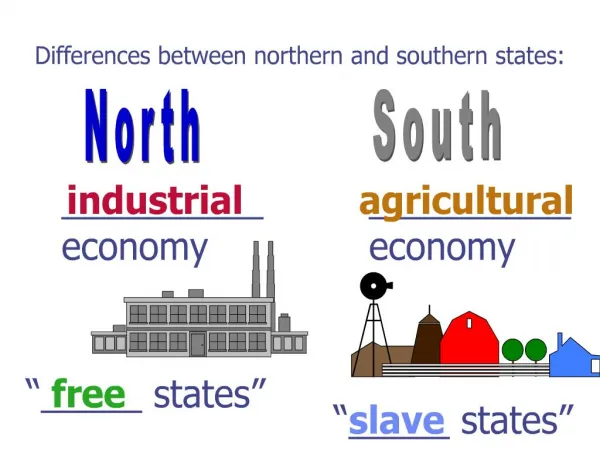
Advantages • Union • Most of the population • Large advantages in resources • Most of the transportation and industry • Raising and Supplying Army • Confederacy • Defending their homes • Strong sectional pride • Better military tradition and leadership
Government Powers • Both sides had to increase central government powers • Raise an army • Supply armies • Finance the war • Suppress any opposition
Raising Armies • Volunteers at first • Drafts begin • Riots • Bounties Paid • Substitution Possible • Many volunteers
Supplying Armies • Industrial Capacity • Transportation Capabilities • Financial Centers • Foraging the Land • Shortages
War Politics • War to Preserve the Union • Civil Rights were restricted • Emancipation Debated • Needed a higher cause • Emancipation Proclamation Jan. 1, 1863 • Changes the purpose of the war
Others in the War • African Americans • Enlist because of Emancipation Proclamation • Segregated Forces • 54th Massachusetts (1st regiment organized) • Women • Managed farms & businesses • Nursing • Elizabeth Blackwell: 1st female physician created the U.S. Sanitary Commission (medical assistance) • Clara Barton: famous nurse during the Civil War
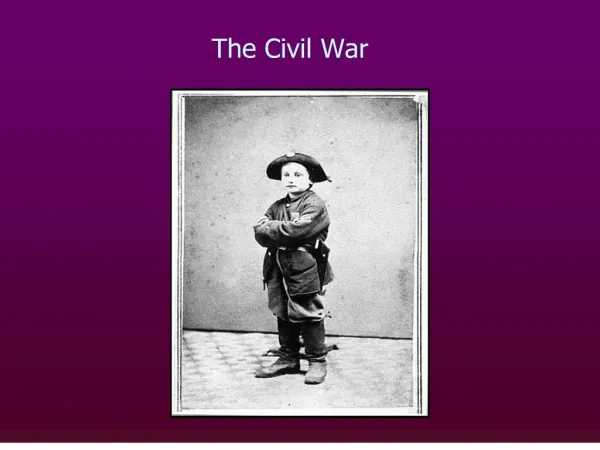
Soldier’s Lives • Disillusionment of war • Filthy conditions • Poor food • Bad medical care • Diseases (small pox & pneumonia) • Amputations b/c of gangrene • Prison Camps • Prison Exchanges (eventually stopped) • Andersonville (GA): horrible treatment of prisoners & the commander Henry Wirz was the only person executed for war crimes